Cobalt oxide is one of the strongest ceramic colourants. In tile, pottery, and sanitaryware glaze systems, very small quantities can produce deep blue shades.
Sulman Traders trades and supplies black cobalt oxide. It is not manufactured by Sulman Traders, and price is confirmed at quotation. Current MOQ is 2 kg.
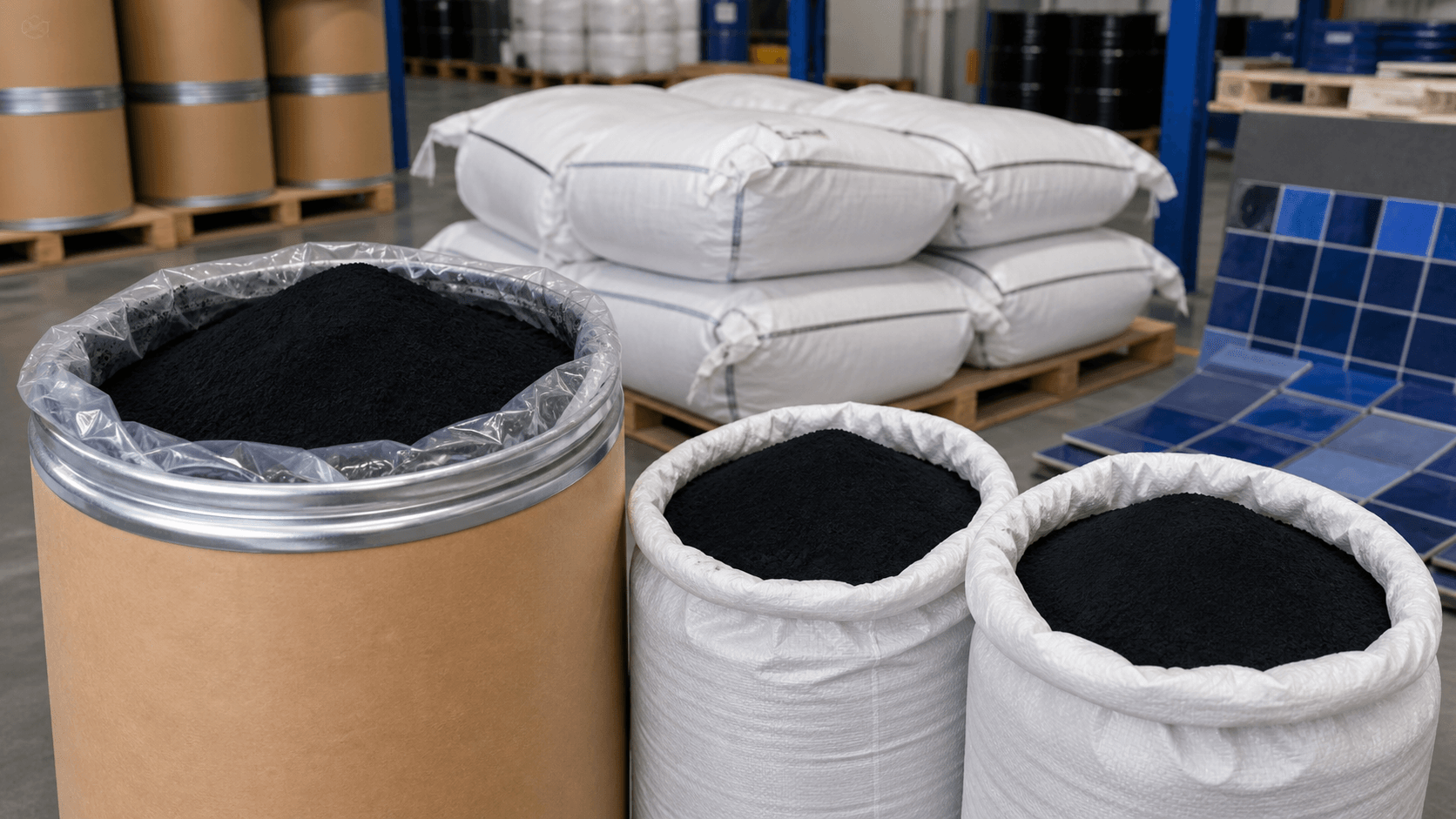
Black cobalt oxide bulk powder for ceramic glazes
1. Why Cobalt Oxide Is Powerful
Cobalt compounds create intense blue colour in ceramics and glass. Because cobalt oxide is so strong, the dosage is usually much lower than many other colourants.
Too much cobalt can overpower a glaze, create overly dark shades, or increase cost unnecessarily.
2. Tile and Sanitaryware Use
Tile factories and sanitaryware producers use cobalt oxide in glaze and ceramic stain systems where blue colour strength and durability are needed.
Consistency matters because blue shade differences are easy to see across tiles, wash basins, decorative pieces, and pottery batches.
3. Buyer Checks
Ask for formula, grade, appearance, packaging, MOQ, COA/SDS support, and whether the material is suitable for ceramic glaze or pigment manufacturing.
For cobalt oxide, sample testing is especially important because a small dosage change can shift colour strongly.
4. MOQ and Practical Supply
Sulman Traders currently lists black cobalt oxide MOQ as 2 kg. Price is confirmed at quotation because cobalt-based materials can move with market availability and sourcing cost.
Buyers should confirm whether they need ceramic-grade, pigment-related, or higher-spec technical material.
Practical Pakistan Buyer Context
For buyers in Pakistan, Cobalt Oxide Uses in Tiles and Glazes is usually not a casual purchase. The buyer may be a ceramic factory, agri dealer, glass user, laboratory, coating formulator, trader, or workshop owner who needs the material to perform correctly in a real process. That is why a useful chemical article should answer more than the definition. It should explain grade, packaging, MOQ, current price signals, delivery, safety, and the checks a buyer should make before spending money.
Many failed purchases happen because the buyer asks only for the chemical name. The better method is to describe the end use: ceramic glaze, crop use, water treatment, silver chemistry, pigment manufacturing, glass colour, cattle foot bath, laboratory test, or general industrial supply. The same product name can still have different grades, strengths, particle sizes, moisture levels, and packaging expectations.
Local conditions also matter. Delivery from Lahore to Karachi, Multan, Faisalabad, Islamabad, Hyderabad, Gujranwala, or smaller cities can change timing and total cost. A factory planning production should confirm stock and transport before the material is needed, while a laboratory should confirm small-pack handling and storage instructions before opening the container.
Common Buying Mistakes to Avoid
The first mistake is comparing only the lowest price. Price matters, but a low-cost chemical can become expensive if it causes colour mismatch, weak crop performance, failed lab results, poor solubility, contamination, caking, or rejected finished goods. Always compare the price with grade, documentation, packaging, delivery, and supplier experience.
The second mistake is ignoring packaging. A 25 kg bag, 10 kg trial quantity, 2 kg cobalt order, or 25 g silver chemical box each fits a different buyer. Buying too little can interrupt production, while buying too much without testing can lock money into unsuitable stock.
The third mistake is skipping a sample or small trial. For ceramics, glass, pigments, coatings, laboratory work, and agriculture-related use, the buyer should test the material in the actual process whenever possible. A chemical that looks correct in a photo still needs to match the recipe, equipment, dosage, firing condition, water quality, or test method.
Documents, Testing, and Supplier Questions
Before placing a bulk order, ask the supplier for the exact product name, chemical formula, grade, current price, MOQ, packaging size, stock position, delivery estimate, and whether COA/SDS support is available. A Certificate of Analysis helps with quality expectations, while a Safety Data Sheet helps workers understand handling and storage precautions.
For repeat purchases, keep a simple record of supplier name, batch or delivery date, quantity, price, packaging condition, and the result in your own process. These records help when reordering, comparing grades, training staff, or answering customer questions if you resell the chemical.
Buyers should also ask what the material is not suitable for. This question is especially important for agriculture, animal feed, medical, laboratory, battery, and electroplating applications, where the wrong grade can create safety or performance problems.
Storage, Handling, and Workplace Safety
Industrial chemicals should be stored in labelled, sealed packaging away from moisture, direct sunlight where relevant, food, feed, children, and incompatible materials. Powders and crystals should not be left open because they can absorb moisture, collect contamination, or create dust exposure during handling.
Workers should use suitable gloves, eye protection, and dust control when weighing or mixing chemicals. Silver nitrate needs extra care because it can stain skin and surfaces and is sensitive to light. Copper sulphate needs care around water systems because copper compounds can harm aquatic life if misused. Cobalt oxide and copper oxide powders should be handled with strong dust precautions.
These notes are general guidance, not a replacement for the official SDS. Every buyer should follow workplace rules, product-specific SDS instructions, and technical advice for the exact application.
Related Product and Price Guides
If you are comparing chemicals for production or resale, these related pages can help you check current product details before contacting the team:
Buyer Checklist
- Request a current Certificate of Analysis and Safety Data Sheet.
- Confirm assay, impurity limits, moisture level, particle size, and packaging size.
- Ask whether the grade matches your use: ceramic, lab, agriculture, electroplating, or general industrial.
- Run a small production trial before scaling to full batch use.
Conclusion
The best chemical purchase is not only about price per kilogram. It is about purity, consistency, documentation, and choosing the grade that matches your process. Sulman Traders supplies industrial chemicals across Pakistan with practical support for manufacturers, traders, laboratories, and production teams.
Visit our Black Cobalt Oxide product page or contact us for availability, pricing, packaging, and technical documents.